
Trying to Try
In Defense of Limited Agency (and another year of being human)

Author’s Note: Before we begin, I just want to pause to say thank you. To those who’ve become paid subscribers and are helping to support this work, and to all of you who keep showing up here with such care. It truly is the kindest place on the internet. You are so good to one another. This is a rare community, and I don’t take it for granted.
I used to experience time as productivity.
Checklists, packing lunches, and yelling ‘REMEMBER TO PICK UP LAUNDRY DETERGENT.’ I invested in efficiency, streamlined my habits, and adopted proven principles. I could color-code my soul, pouring more into less.
Every time I’m feeling low or tired or sick, I envy my Most Productive Self™. I find myself almost immediately hungry for that familiar feeling of being propelled through the world.
I’m quite certain that I have been a human bulldozer for as long as I can remember.
When my parents returned from a trip once, they discovered that I had renovated and staged their entire basement. (“Did you know wood paneling can be painted? I organized your record collection. I hope you weren’t attached to the treadmill; it didn’t work with the new floor plan.”) Years later, home from college for a weekend, I came extremely close to signing paperwork for a cabin they did not yet realize they needed. Had they ever really considered the benefits of a rustic second property and a Toyota Corolla?
I oscillated between considerate and wildly presumptuous in my efforts to steamroll the shortest path between thought and action.
Sometimes I wonder if I felt so at home in America because of its long-standing romance with efficiency, an ideal largely untarnished since the Industrial Revolution. In my classes, I teach seminary students about Frederick Taylor, a plant foreman at the Midvale Steel Company in 1880s Pennsylvania. Appalled by how little workers seemed to accomplish in a day, Taylor developed a system of “scientific management” that promised to improve productivity by breaking work into measurable, repeatable units.
Henry Ford adapted these ideas, revolutionizing manufacturing through speed, standardization, and output. Workers no longer needed to grasp the whole, just perform their part reliably and without interruption. Human bodies became instruments tuned for efficiency.
When I explain this to my divinity students, I try to sound ominous, a Dickensian ghost of capitalism past.
The virtues of mass production are seductive: speed, productivity, growth. But the labor these students are preparing for is slow and inefficient. Most of the week will be spent offering kindness to a deacon who never liked them or quietly removing heresies from Sunday School material bought online. They will labor for days to gather enough beauty and truth to fill an hour on Sunday, only to receive a dozen comments on the way out about how much people miss the old pastor.
If you want progress, take up running. If you want meaning, run a church.
I say all this with great solemnity before rushing off to a faculty meeting, where I will answer emails with vigorous nodding to demonstrate attentiveness. I outmaneuver small joys like naps in my effort to empty my inbox, secure excellent teaching evaluations, and immerse my son in Canadian folk music. I am a magician with a single trick: watch how this woman can take one moment and divide it into a thousand uses.

No one has seen me worship at the altar of productivity more clearly than my husband, Toban.
One morning, groggy and congested, I took nighttime cold medicine by mistake. Toban found me at 7 a.m., sobbing over the toilet.
“It was green!” I protested, half laughing, half crying. “The pill was green, not blue.”
“Why can’t you just take a nap?” he asked, reasonably.
“I have so much work I want to get done! WHY? WHY IS THIS HAPPENING TO ME?”
He looked around the bathroom like a detective surveying a crime scene.
“Well,” he said carefully, “it looks like the real victim here is efficiency.”
I am READY MADE for the month of January, a month that tells us to forget what kind of creatures we are.
It forgets that bodies falter, attention wanes, and motivation flickers. That time is not a neutral container, but something experienced unevenly, compressed by grief, distorted by fear, dulled by exhaustion. It forgets contingency, dependence, and the ways we are shaped by forces far beyond our choosing.
January prefers a cleaner anthropology.
The story goes like this: you are a sovereign individual standing at the threshold of a brand-new year. With enough resolve, discipline, and clarity of intention, you can become someone else. Better. More efficient. Less needy. Less embarrassing. Less you.
New Year’s resolutions are not neutral. They are moral documents. They assume that change is primarily a matter of will and that failure is therefore personal. They treat limitation as something to overcome rather than something to live with.
And here we are—barely a week in—already discovering that perfection is harder than advertised.
Which is why it bears repeating, every year and louder for the people in the back: there is no cure for being human. Not because we have failed, but because finitude, vulnerability, and dependence are not design flaws. They are the design.
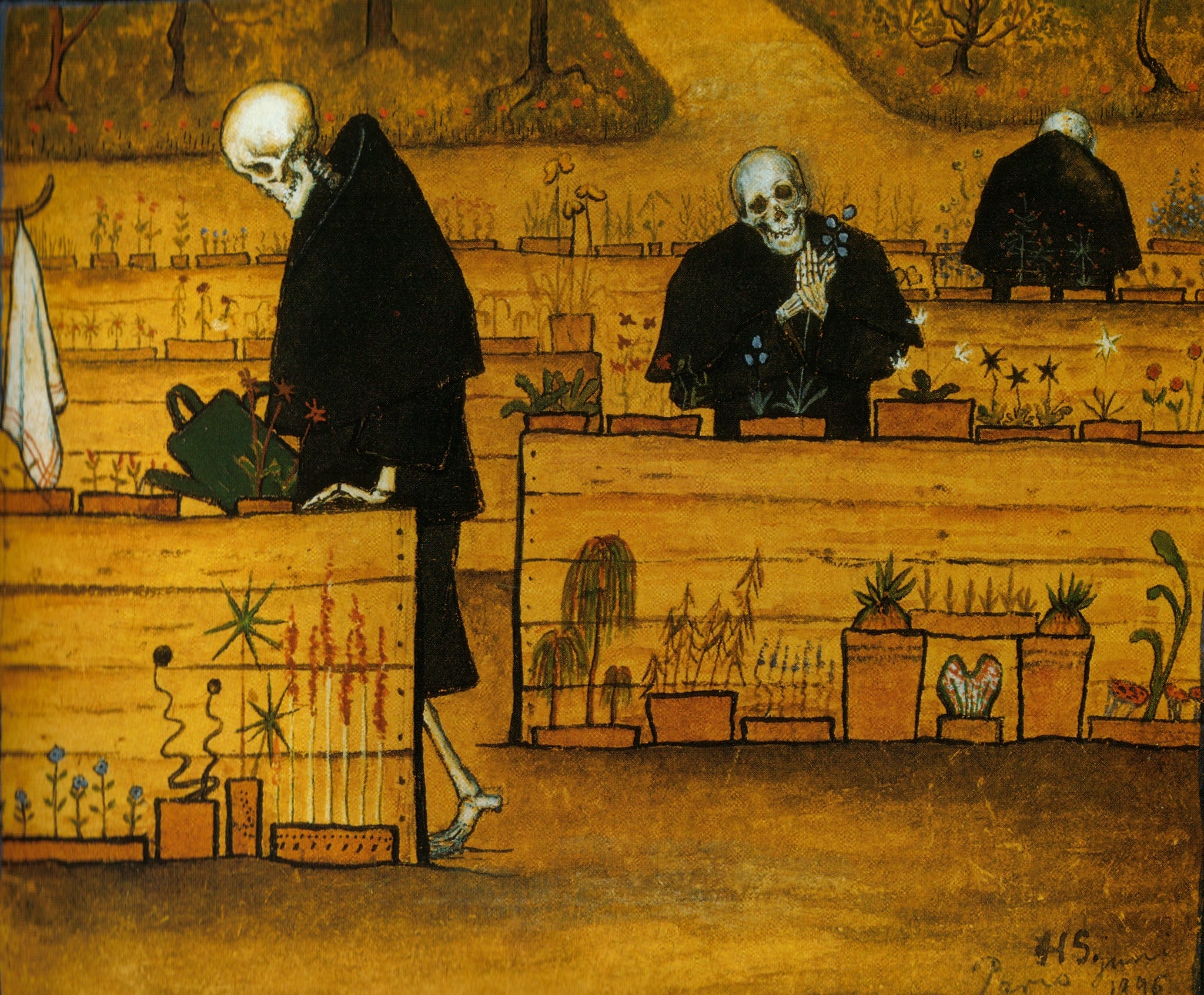
A Friendly Reminder About Limited Agency
One of the most persistent lies of modern life is that agency is unlimited if we just access it correctly. The right mindset. The right habits. The right emotional regulation. The right spiritual posture.
This belief saturates productivity culture, wellness culture, and religious optimism alike. It lurks beneath phrases like everything happens for a reason, you manifest what you focus on, or this wouldn’t be happening if you were doing the work.
But the reality most people are living is messier.
People are grieving without closure.
They are caring for loved ones they cannot fix.
They are stuck in economic, relational, or psychological loops that do not yield to effort.
Our agency is real but limited. We choose some things, influence others, and control little. Pretending otherwise exhausts, not empowers, us.
When limitation is framed as failure, suffering acquires a moral charge. We don’t simply struggle—we conclude that we are deficient.
Trying to Try
In a culture obsessed with optimization, even trying has become aggressive. Try harder. Try smarter. Try again. Try without excuses.
But for people who are tired—emotionally, spiritually, relationally—trying can feel like another demand they cannot meet.
That’s why if I want to stop being my monster self, I need to return to a smaller, humbler posture: trying to try.
Trying to try acknowledges that sometimes the most a person can do is remain oriented toward life without being able to act decisively within it. It honors effort without requiring progress. It allows for days when survival counts as participation.
Humans are not assembly lines.
We are cyclical, fragile, and unpredictable. We regress. We pause. We carry histories that cannot be optimized away. When we measure ourselves against machine standards, we will always come up short.
Trying to try is a refusal of this fantasy. It is a way of saying: I am not broken because I cannot perform endlessly.
And maybe that is enough for January.
There is no cure for being human.
But there is permission to be one.
So today, I want to encourage you to try. Not because everything is easy, but precisely because it isn’t. Try something small and kind for yourself—your favorite cup of tea, 10 minutes of fresh air, a cozy blanket and a good book, or a call to someone who makes you smile. Or if you need to feel like a beast, take a run and put it on social media. OTHERWISE, WHY RUN? It’s too hard.
What’s one way you’re learning to live with your limits right now?
I am in hospital, having had colorectal surgery yesterday. The room is dimly lit, no lights on, the sky covered by heavy clouds. A lady with Housekeeping is tidying up; my beautiful adult daughter is gently snoring on the fold-out couch. I’ve been practicing trying to try for the last year and a half, and now it’s a mandate. I hope I come to like it but I probably won’t, not all the time. Yet this where I am, and this is what it is, and I feel grace continually falling all over me, blanketing my sore shoulders, soothing my aching belly. That’s probably the gabapentin and oxycodone kicking in, but who am I to question how grace comes?
Blessings to you, Kate, and to this whole community. Thank you for all you all do (and don’t do) in the name of love, every day.
WOW Kate!!! I can’t think what a POWERFUL treat is on “living life” these ideas would have been to any adolescent ! Your sentence” When limitation is framed in failure, suffering acquires a moral charge. We don’t simply struggle, we conclude that we are deficient.”
Even now, as a 70 something, the concept of “limited agency” is so meaningful. If I am able to reframe my days ahead with this sense that we are, I am not this overflowing , never ending source of agency than it helps create a greater acceptance of “I do have limited agency for a variety of reasons but that limited agency should not be a catalyst for guilt or a sense of deficiency!
This thought is HUGE. I certainly want my young adult ( 30s) and my friends to hear this. If I was a practicing Counselor I would be incorporating this concept into my practice. As parent, I SO would have loved to have had this as a bedrock if what I would have shared with my young and evolving children! As my former 10 year old and beyond I would have loved to have heard my parents speak these words, leading to a greater self worth.
Huge, Kate!
I also live with someone who does suffer from Major Depression. Your discussion of “people who are tired…” “trying” can feel like another demand they cannot meet”….this reminder that sometimes trying is just not possible, yet that the trying in each day, honoring the effort is important too.
Thanks for this valuable post! 👏👏☺️✨